Set Assignment
You must complete ALL activities.
Activity 1
1. In this activity, you will demonstrate your knowledge and understanding of the structure and function of eukaryotic cells and tissues.
(a) (i) P roduce a report that describes the structure of animal cell organelles. Your report should include annotated photographs, micrographs, and/or diagrams of the following:
-
- nucleus
- rough endoplasmic reticulum
- nucleolus
- lysosomes
- Golgi apparatus
- 80S ribosomes
- cytoplasm
- vesicles
- smooth endoplasmic reticulum
- centrioles • plasma membrane
- (ii) U sing annotated photographs, micrographs, and/or labelled diagrams, describe how the structure of the following organelles relates to their function:
-
- Golgi apparatus
- Lysosomes
(iii) Describe the microscopic structure of these animal tissues:
-
- cuboidal epithelium
- skeletal muscle
- myelinated neurons
- bone (connective tissue).
You must support your descriptions with illustrations of each of the tissues. Your illustrations may include drawings or micrographs of light microscope slides.
Are You Searching Answer of this Question? Request British Writers to Write a plagiarism Free Copy for You.
Chat Now(iv) Produce diagrams to compare and contrast the appearance and structure of these connective tissues:
-
- loose reticular fibres
- tendons
- spongy bone.
Your answer must link the differences identified to the function of each tissue.
(b) (i) Figure 1 shows the ultrastructure of a plant cell.
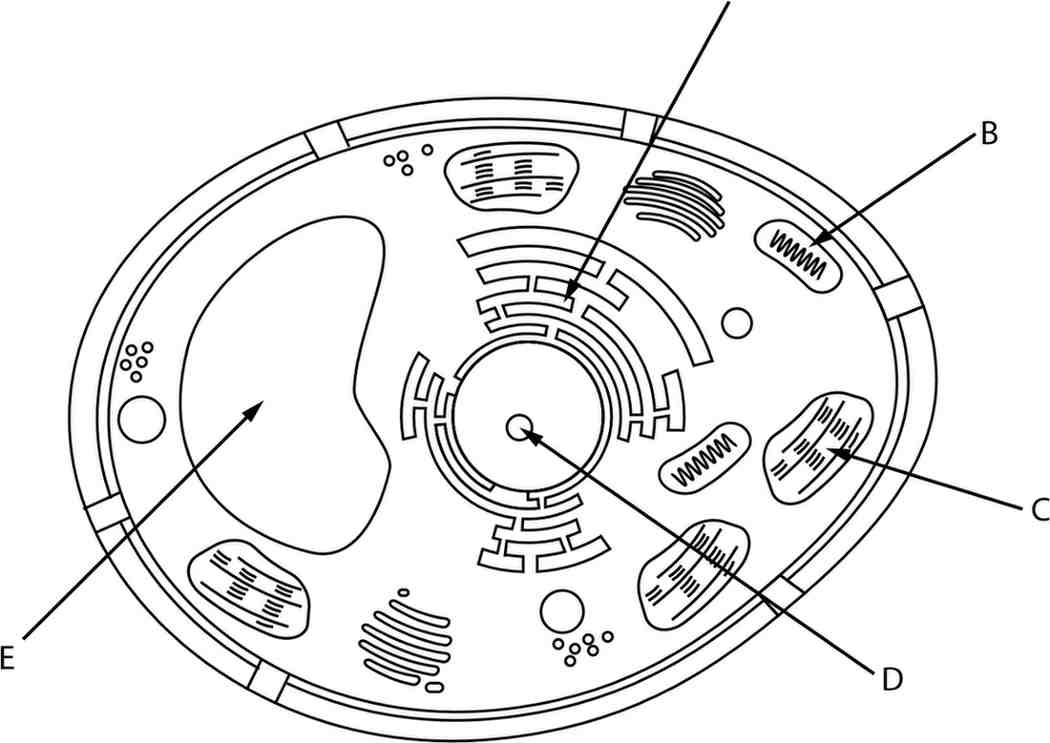
Figure 1
Identify and describe the cellular organelles labelled A–E in the plant cell shown in Figure 1.
(ii) Describe the microscopic structure of these plant tissues:
-
- xylem
- collenchyma.
You must support your descriptions with illustrations of each of the tissues. Your illustrations may include drawings or micrographs of light microscope slides.
(iii) Produce annotated diagrams to compare and contrast the appearance and structure of these plant tissues:
- parenchyma
- xylem
Your answer must link the differences identified to the function of each type of tissue.
(iv) Analyse the process of differentiation that leads from embryonic mesoderm stem cells to the formation of skeletal muscle.
Your analysis must include a discussion of the interrelationship between developing cells and the formation of skeletal muscle. You may include diagrams to illustrate your answer.
(v) Plant meristems divide to form unspecialised cells which can then become any type of plant cell. Analyse the process whereby meristematic cells differentiate to form, firstly, procambium and then tissues that make up the vascular tissue in plants.
You may include diagrams to illustrate your answer.
This activity covers learning aim A.
A.P1, A.P2, A.M1, A.D1
Activity 2
In this activity, you will look at the normal structure and functions of the musculoskeletal system. You will also examine some disorders that can affect this system.
(a) (i) Explain the functional role of the musculoskeletal system.
You must explain how the musculoskeletal system is involved in:
- supporting the body
- protection of the brain
- rotation of the neck
- production of white blood cells
- the role of ligaments
- storage of phosphorus.
You may use photographs, diagrams, and/or drawings to illustrate your answer.
(ii) Produce a report that identifies six types of synovial joint and where they can be found in the human musculoskeletal system.
(iii) You should add to your report an explanation of how the structure of these six types of synovial joint allows normal movement.
(b) (i) Compare the following disorders:
-
- dislocation of the shoulder
- osteoarthritis of the knee
- fracture of the lower jaw.
For each disorder, you must include a detailed description of:
- type of joint affected
- muscle groups
- muscle attachments
- how normal movement is compromised.
(ii) For each of the three disorders in (b) (i) describe and compare two possible corrective treatments.
You must provide a detailed explanation of why healthcare professionals might select one treatment instead of the other.
(iii) Evaluate the possible corrective treatments for osteoarthritis of the knee.
You must include details of:
- how treatments affect the physical, physiological, and social wellbeing of the individual
- possible limitations of the treatments.
This activity covers learning aim B.
B.P3, B.P4, B.M2, B.D2
Get Solution of this Assessment. Hire Experts to solve this assignment for you Before Deadline.
Hire NowActivity 3
In this activity you must produce a report on the anatomy and physiology of the lymphatic system.
(a) Activity 3 worksheet (Figure 2) shows the gross anatomy of the lymphatic system. Label Figure 2 to show the position of the:
-
- tonsils
- adenoids
- axillary lymph nodes
- supratrochlear lymph nodes
- spleen
- thymus gland.
Include the labelled Figure 2 in your report.
(b) (i) Describe the function of each of the structures that you have labelled in Figure 2.
(ii) Describe the movement and formation of lymph fluid and its different functions in the body.
(c) (i) Explain lymphadenitis and its treatments. This should Include:
-
- a description of the physiological signs and symptoms
- how normal function of the lymphatic system is disrupted
- a description of the treatments
- the physiological basis of the treatments.
(ii) Evaluate the effects of lymphadenitis and its treatments. This should include:
-
- the effects of lymphadenitis on the lymphatic system
- the likely benefits of the treatments
- the potential risks and problems of the treatments.
You must use the correct scientific terminology throughout your report.
This activity covers learning aim C.
C.P5, C.P6, C.M3, C.D3
Activity 3 worksheet
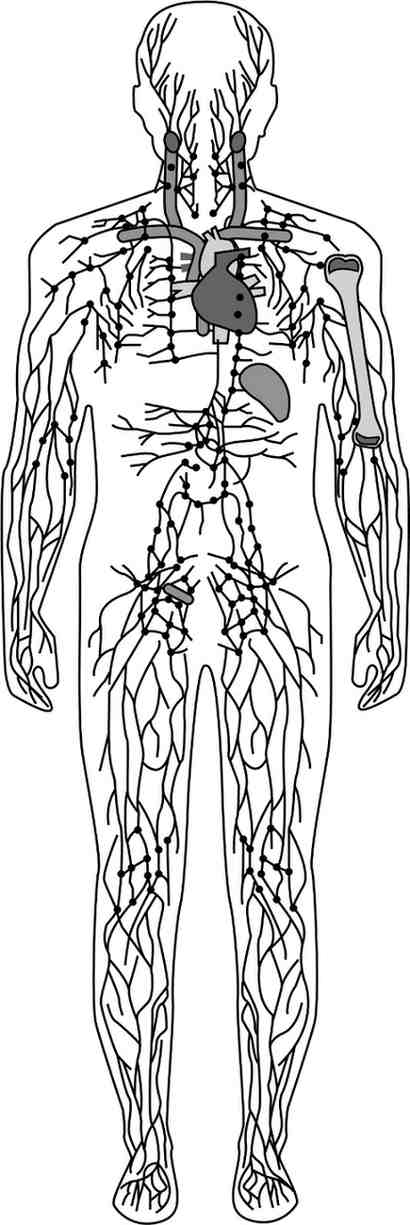
Figure 2
Assessment Criteria
Learning aim A:
Understand the microscopic structure and the functions of eukaryotic cells and tissues
A.P1 Describe the structure and function of organelles within eukaryotic cells.
A.P2 Describe the different tissue types present within plants and animals.
A.M1 Compare and contrast different tissue types within plants and animals.
A.D1 Analyse the process by which stem cells differentiate to become specialised cells, tissues and organs within plants and animals.
Learning aim B:
Understand the impact of disorders of the musculoskeletal system and their associated corrective treatments
B.P3 Explain the functional role of the musculoskeletal system in the human body.
B.P4 Describe the effect of disorder of muscles and joints and possible corrective treatment(s).
B.M2 Compare how disorders of the musculoskeletal system can affect how muscles bring about movement of joints and the role of corrective treatment(s).
B.D2 Evaluate the effect of corrective treatment(s) associated with a musculoskeletal disorder.
Learning aim C:
Understand the impact of disorders on the physiology of the lymphatic system and the associated corrective treatments
C.P5 Describe the gross anatomy and function of the organs of the lymphatic system.
C.P6 Describe the effect of a disorder on the lymphatic system and possible corrective treatment(s).
C.M3 Explain the physiological reasoning for corrective treatment(s) associated with a disorder of the lymphatic system.
C.D3 Evaluate the effect of corrective treatment(s) for a disorder of the lymphatic system.
Key
P = Pass
M = Merit
D = Distinction
Stuck in Completing this Assignment and feeling stressed ? Take our Private Writing Services
Get A Free Quote